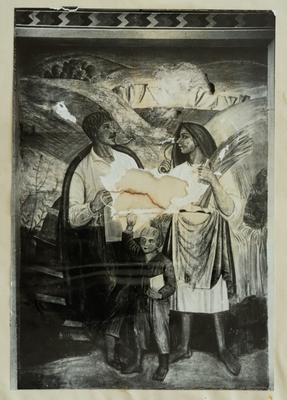
Іванова А. М. Розпис столової інженера Лукіна
невідомий

Основна інформація
- ID
- Ivanova-50
- Автор
- невідомий
- Назва
- Іванова А. М. Розпис столової інженера Лукіна
- Дата створення
- 1930-ті (?)
- Техніка
- фотографія (паперовий носій)
Додатково
- Жанр
- інтер'єр
- Провенанс
- Архів Антоніни Іванової
- Місце
- м. Москва (?) (СРСР)
Інформація про автора
Опис роботи
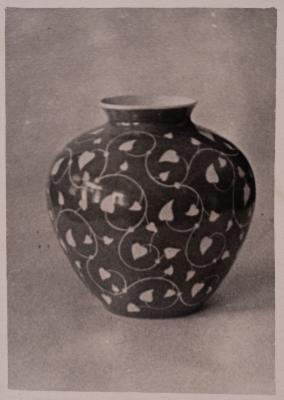
На фотографії зафіксовано частину приватного інтер’єру з реалізованим Антоніною Івановою тематичним розписом (відповідно до українськомовного напису простим олівцем під фотографією: «Іванова А. М. Розпис столової інженера Лукіна»). Ця робота є особливою, адже у ній поєднано й зафіксовано все різноманіття теоретичних та практичних досвідів мисткині. На перший погляд, з точки зору композиції, перед глядачем розгортається стилізована локальна варіація голландських розписних кахель, як, до прикладу, у палаці Меньшикова (Санкт-Петербург, рф). Однак достатньо ретельно вдивитись у зображення, й у нижньому правому куті можна побачити репліку роботи Антоніни Іванової 1920 року (київського періоду) «Катерина» за мотивами поеми Тараса Шевченка (папір, гуаш, нині зберігається у ЦДАМЛМУ). Поруч неї знаходимо «кахлю» із зображенням вітрильника, що дуже схожий на графічну замальовку, котра, вірогідно, була роботою Михайла Лезвієва (нині зберігається у Галереї). По центру нижнього ряду бачимо фігуру вершника на коні з шаблею (можливо, представника Північного Кавказу, наприклад черкеса). Поруч нього зображено жінку, яка сидить на скрині у стилізованому народному строї біля вікна та пряде. Майже аналогічні композиції з жінками, які виконують таку роботу, ми знаходимо і в Антоніни Іванової («Пряля», середина 1920-х, НХМУ), і в Оксани Павленко (ескізи композиції «Пряля», 1921, ЦДАМЛМУ), і у Володимира Фаворського (гравюра на дереві із зображенням прялі 1921 р.). Завершує ряд секція з мотивом дерева, що має аналогії як у практиках бойчукістів, так й у барокових гравюрах та маргінальних рисунках. У центральному ряді, крайнім з правого боку зображено стилізоване місто, що знову ж має алюзії на практики художників кола Михайла Бойчука. А одразу поруч нього – «кахля», що відображає сцену цілком побутового змісту – молодий чоловік, одягнений відповідно до моди 1920-х рр., сидить у лісопарковій зоні та п’є пиво з пляшки характерної форми. По центру цього ряду – зображення півня, що трапляється у роботах Антоніни Іванової – розписах на шовку (один з таких зразків є у колекції Галереї) та графічних роботах. З лівого боку від зображення півня – фігура дами, яка прогулюється на узліссі та тримає у руках букет польових квітів. Й завершує цей ряд дещо карикатурне зображення тварини, котра за силуетом та гривою нагадує коня. Хвіст у неї короткий, закручений, як у свині, роги немов у бика, а кінцівки завершені чимось на кшталт курячих лапок, й при цьому з ніздрів істоти йде густий сизий дим (можливо, це фантазія на тему химери або індрика). У верхньому ряді відтворена самотня стилізована ялиця, а одразу поруч неї сегмент із зображенням блазня (можливо, Арлекіна) у характерному вбранні з бубонцями-брязкалами, дудкою, у яку він дме, та невстановленим предметом (глеком? чи мошною?). Цей персонаж суголосний образу, відомому з роботи Костянтина Сомова «Арлекін та смерть», 1907. З практикою цього автора Антоніна Іванова була ознайомлена ще у період перебування у Петрограді. По центру ряду бачимо дерево з плодами, вірогідно яблуню, що була частим мотивом у практиках Михайла Бойчука та художників його кола (наприклад, твір М. Бойчука «Під яблунею», 1912–1913, колекція Галереї; М. Рокицького «Яблуня», 1923, НМЛШ; А. Іванової «Збір яблук у колгоспі», 1930-ті, колекція Галереї). Поруч цього сегменту – зображення жінки, яка сидить в інтер’єрі та тримає на руці пташку. Це також не рідкісний мотив для митців кола Михайла Бойчука. Завершує цей ряд фігура жінки у стилізованому народному строї, яка йде босоніж берегом річки й несе відра на коромислі та у руці (знаходимо аналогічні мотиви в ескізі Сергія Колоса до килима, 1920-ті, приватна колекція). Встановити, що саме було у прямокутнику над цими «кахлями» неможливо, але нижня частина цього розпису трактуванням позему також має перегук з практиками мистців-бойчукістів. Не меншої уваги ніж сам розпис художниці потребують предмети на столі (?) перед розписаною стіною, адже, до прикладу, фрагмент зображеної на світлині тарілки є відомою супрематичною роботою Казимира Малевича «Динамічна композиція», 1923 (автором форми є Серафима Яковлєва (1910–1993), автори розпису – Казимир Малевич та Вероніка Вєтрова, надглазурний поліхромний розпис, фарфор, Ленінградський фарфоровий завод, один зі зразків зберігається у Державному Ермітажі, Санкт-Петербург, рф). Інший виріб, що стоїть на передньому плані, однак є доволі темним, внаслідок чого видимою є тільки частина силуету, за гіпотезою дослідниці Ольги Хуторянської є дерев’яним скопкарем (тип посудини для пиття) кінця ХІХ століття – поч. 1920-х рр. У виданні В. С. Воронова 1924 року «Про селянське мистецтво» на 51 сторінці репродукований майже аналогічний виріб (ілюстрація 40 – предмет з Архангельської губернії), про який сам дослідник писав «Скопкарі геніально втілені у форму водяної птиці, довгий дзьоб та плаский хвіст слугують двома ручками цієї посудини (...) вся ця численна група фігурного посуду вводить нас у простір надзвичайної конструктивної фантазії, оригінального та вмілого володіння формою і розвинутим художнім смаком. Якийсь особливий відбиток витверезної фантастики властивий для цих пам’яток. Давні символічні риси, властиві їхньому вигляду, прийняті, перетворені й розчинені у побутових формах» (с. 60). Наголосимо, що Антоніна Іванова працювала з цим виданням, про що свідчить зроблений художницею розпис, який, як позначено, зроблений «за Вороновим». Виріб, що був розташований у їдальні, є радше більш пізнім, та з огляду на особливо витончені форми, ймовірно виготовленим в артілі Василя Ворноскова (1876–1940), що функціонувала з 1921 (за іншими даними, з 1922). Поруч скопкаря розташована досить типова для часу та регіону мідна кружка та металева підставка на ніжках з головою тварини (вірогідно, призначена для чогось гарячого, наприклад праски на вугіллі). Стосовно датування самого розпису, то, ймовірно, це середина або кінець 1920-х, але не швидше 1923 (з огляду на датування роботи К. Малевича).
Правове регулювання
Львівська національна галерея мистецтв імені Б.Г. Возницького